
New build & renovation electrical guide
Electrical Planning for a New Home or Major Renovation
Five essential electrical decisions — plus a bonus smoke alarm safety tip — to get right before or during your build.
Why it matters
Get Your Electrics Right the First Time
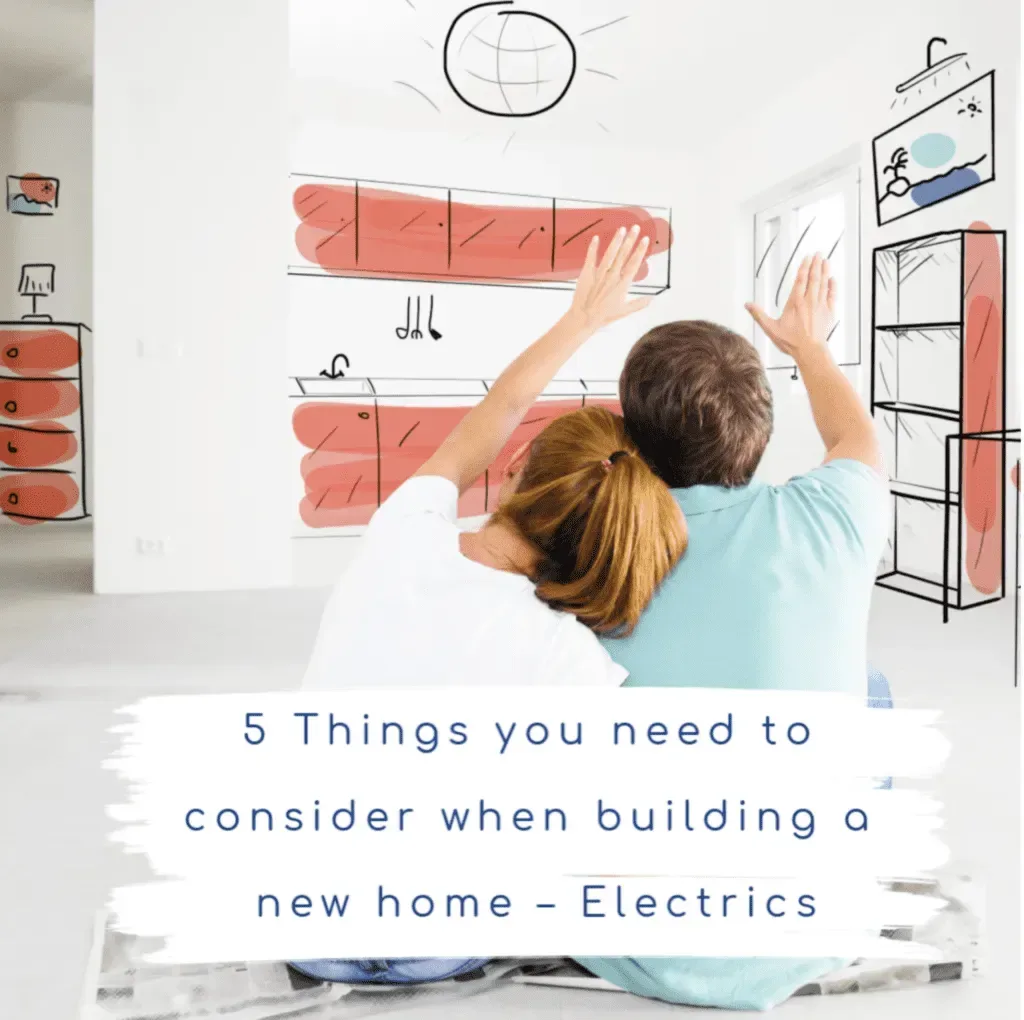
Building a new home is incredibly exciting and extremely stressful. You're suddenly consumed in everything design, completing tasks given to you by the builder, choices, project management and functionality.
We are here to help you out with the electrical side of things. It's important you get this right the first time and don't overlook its importance. If you get it wrong, you will face consequences that range from a minor inconvenience to major health and safety risks.
Point 1
Start With Outlet and Device Placement
1. Take time to plan the location of the outlets
Grab a copy of your house plans and map out where your furniture and electrical devices will go. Also think about how you will do small things like vacuum the room. Once you have a rough idea and plan in place about how you will use the room, set up a meeting with your electrician. Do a walkthrough of your home with your electrician when the frame is up so you have more of an idea. Together you can map out electrical solutions that allow you to put power points, USB chargers, data points and cables exactly where you need them to be. Take your holidays into account, like Christmas. Do you want a hidden powerpoint in the floor for your Christmas tree or floor lamps? Do you want a USB point near the couch, kitchen and bed to charge your devices?
A good electrician will offer you creative solutions and make suggestions for things you haven't thought of. They will also discuss the safety and mandatory law aspects of electrics like smoke alarms, safety switches, child safety and prevention of overloaded circuits.
If you can't afford all the power points you need straight up, you can future-proof your home, so they are easy to install later on by making sure the wiring is in place.
Do not forget about the outside! So many people put all of their time and energy into the inside, they forget about what's happening with landscaping. Your power boards and wiring systems need to be ready to handle these things as well. So think about outside lights, sensors, alarms, security cameras, power points — do you want garden lights, path lights, driveway lights, a solar system? You need to have a plan.
Point 2
Choose the Right Wiring System and Switchboard
2. Properly understand the wiring system you require
Make a list of all the electrics you will be using in your home including those that need to be hardwired like ovens, dishwashers, cooktops, rangehoods etc. Are you a gamer who requires family ports and circuits to accommodate multiple devices at once? This is important so your electrician knows what size switchboard you require to run your home safely. You may also want to think about surge protection in your switchboard to protect all your expensive investments straight from the hub. Safety switches on all circuits is also recommended to prevent electrocution — especially if you have children and animals.
There are three main types of wiring systems: lead sheath, surface conduit and concealed conduit. Concealed conduit is hidden and the most popular option from an aesthetic point of view. It can also offer extra protection. It's important that you talk to your electrician about the system that's right for you.
Point 3
Consider Smart Wiring and Advanced Systems
3. Do you need extra power or advanced wiring systems?
With the ever-increasing technology, many people choose to have "smart wiring" to use with Google Home, large home audio systems with surround sound, Foxtel connections, entertainment systems and work-from-home offices full of equipment. If this is you then you may need to opt for more advanced wiring options.
Point 4
Think About Energy Efficiency From the Start
4. Think about your energy efficiency
The price of power will only keep increasing alongside its environmental impact, therefore doing your bit to help reduce emissions and keep costs down is vital. Home energy management systems (often referred to as HEMS or EMS) are a great and smart way to save some money. Good quality systems allow you to control your devices, lights, swimming pool, air-cons etc remotely from the home and give you insights into how much power you are using and what it's costing. They can also take your solar panels into account. Make sure you do some research and discuss these options in your electrical meeting.
Point 5
Have Fun With Switches and Power Point Design
5. Have fun with aesthetics
Gone are the days of boring light switches and panels. There are so many customisable options out there to complement your interior design. Our favourites are the Clipsal Iconic range — a great all-rounder for cost, appeal, functionality, custom options and top quality. Have a chat with your electrician to see our collection of designer switches available. If you already know what you want, we can get it for you.
Bonus tip
Bonus Tip: Smoke Alarms!
All new builds and renovations mean compliant smoke alarms. New legislation states when replacing smoke alarms, they must be of a photoelectric type which complies with Australian Standard (AS) 3786-2014. Not all alarms are the same — there are better brands, higher quality and many different functions. For the full legal requirements, see our guide to Queensland smoke alarm laws.
Smoke alarms must be installed on each storey:
- In each bedroom; and
- In hallways which connect bedrooms and the rest of the dwelling; or
- If there is no hallway, between the bedrooms and other parts of the storey; and
- If there are no bedrooms on a storey, at least one smoke alarm must be installed in the most likely path of travel to exit the dwelling.
However, you may and can put smoke alarms in any room you want. Sometimes the basics are not enough. Depending on your floor design it may not be safe to just have the basics.
For example, in our home we have a fireplace in our living room. Our living room is at the front of the house and all hallways, bedrooms etc are at the other end. Legally, we don't require a smoke alarm in the living room. A piece of cardboard placed too close to the side of the fireplace caught fire. The smoke alarms never warned us as they are all on the opposite side of the home. If it was night time and we were asleep, half the house would have been on fire — the front half where all the safe escape routes are.
Luckily, it was in the afternoon and Chris putting out laundry at the time could smell it and investigated. Already there was a decent size fire brewing, we are very lucky there was no damage or the entire living room wasn't up in flames. That afternoon, smoke alarms were installed in the front half of the home: the living room, dining/kitchen and sitting room that are all in a passage to the hallways connecting to the bedrooms.
You may not want a smoke alarm in a kitchen due to nuisance alarms — to avoid this we can install heat type alarms that sense changes in extreme heat from a fire rather than smoke and steam. If you have high ceilings and cannot disable or test your alarms properly, there are wall panels that interconnect with them and allow you to control them all, isolate the affected alarm and troubleshoot any issues with ease. There are a tonne of different modules and options. A builder will give you the basics, but the basics may not be enough.
Speak to us today to discuss some options and a more suitable smoke detector plan. It's always easier to plan before the build.
Planning a new build or reno
Ready to Plan Your Electrics Properly?
Our licensed electricians can walk your plans with you and design outlet, wiring, switchboard and smart-home solutions that suit how you'll actually live in your new home.
Further information
References
Looking for more guides like this one? Browse our Information & Advice hub for practical electrical and air conditioning advice, or find out more about our switchboard upgrade service.
Local expert electricians
Planning a New Home or Renovation?
Talk to our licensed and insured electricians early so your outlets, wiring, switchboard and smoke alarms are right the first time.